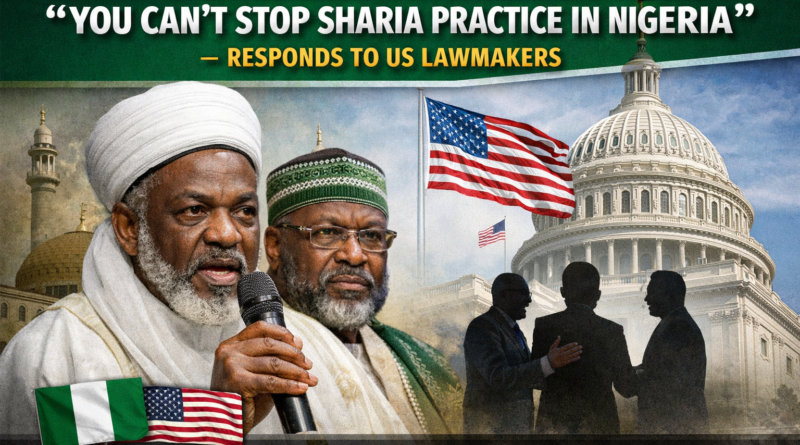
ISLAMIC COUNCIL: “YOU CAN’T STOP SHARIA PRACTICE IN NIGERIA” — RESPONDS TO US LAWMAKERS
The Supreme Council for Shariah in Nigeria has firmly rejected calls from US lawmakers urging an end to the practice of Sharia law in Nigeria, describing the proposals as misinformed and an attempt to undermine Nigeria’s sovereignty.Background of the US Lawmakers’ CallA committee of US lawmakers recently recommended that Nigeria repeal Sharia and blasphemy laws, citing concerns that these laws are allegedly used to suppress dissent and target religious minorities. The report included suggestions such as possible US–Nigeria security agreements and visa restrictions for individuals perceived to violate religious freedom.SCSN’s ResponseIn a detailed statement, the council stressed that:Sharia law is a constitutional right in states that have adopted it and is part of Nigeria’s cultural and religious framework.The US lawmakers’ recommendations are misinformed, particularly regarding claims of religious persecution against Christians in Nigeria.Sharia courts operate legally and voluntarily, applying only to individuals who choose to be under its jurisdiction.Any attempt to abolish Sharia by foreign influence would violate Nigeria’s sovereignty.The council emphasized that Sharia is more than just a legal system; it is a comprehensive framework guiding moral, social, and legal aspects of life for Muslims.On Religious Violence ClaimsThe council rejected claims that violence in Nigeria constitutes systematic persecution of Christians, noting that security challenges affect all citizens—both Muslims and Christians. They pointed to terrorism, banditry, and organized crime as national issues that require coordinated internal solutions rather than foreign intervention.Calls for CoexistenceWhile defending Sharia, the council urged:Respect for Nigeria’s plural legal system and religious diversity.Federal and state authorities to focus on security and governance rather than foreign pressures.Muslims to continue promoting peaceful coexistence, highlighting that Nigeria is home to multiple religions and faiths, and that religious freedom is guaranteed by the Constitution.ConclusionThe Supreme Council for Shariah in Nigeria reinforced that Sharia law will continue in states where it is legally adopted, and that foreign attempts to influence its practice are unacceptable. The council’s statement underscores the tension between international advocacy on human rights and Nigeria’s constitutional autonomy regarding religious governance.
